A lot is happening in the media now about the aged care crisis and a crisis in the NDIS. Those who work within this industry are not nurses. They are support workers. They are at the bottom of the rung and regarded as less than cleaners, yet often with huge responsibilities. We are mostly casually employed in precarious jobs with little supervision, support, or even peer solidarity. We never know when our hours will be, how many hours we will get, and often even where we will be working. Many struggle with children and managing a household in very tough conditions. We are rarely recognised for our important roles and disregarded. For instance, the big push is to return nurses to nursing homes. This ignores the reality of the working situation. We are pushed to work quickly, often untrained, sometimes with cultural or language difficulties in a hostile environment. Bullying amongst care staff due to competing for shifts, lack of time, and lack of satisfaction and competing for shifts are prevalent. We are forced to work in a morally damaging role as we operate against our values and wishes for how we see and why we want to work in this industry.
I have been cornered alone by a man with a razor blade, I’ve been punched, I’ve been inappropriately touched, I’ve been bullied to the point of spending my breaks in tears. I’ve juggled home life with sick children. I’ve spent more on petrol than I’ve received in income in a week driving between shifts. It is a very tough sector to work in.
We need better training, recognition of our role, and secure employment. We also need a support system and the ability to once again care for, protect, and serve those we care for.
But it isn’t all bad. There is beyond the underbelly of exploitation joy.
I began as a middle-aged woman seeking to work through a degree. After 21 years of marriage, I had been replaced by a younger model—well, several younger models. I found myself as a mother qualified for absolutely nothing. I had done some work in my early twenties in nursing homes and decided it would be an enjoyable way to bring in money. I thought good, honest, decent hard work would serve me well, and I was ready to roll my sleeves up.
Firstly, I found I was expected to have a flying car to get between shifts and often rostered to the next one before I left the last. I spent more time in the car than I did paid hours. Rarely was there a care plan, so I was working blind. With little communication with the office and no real support, I found I was basically on my own. I had no peers to support me, and I had no guidance at all.
But I did find solace in those I was sent to serve who became support as we battled through together, and I have had many adventures.
This is such an essential role in the community. You have genuine, raw encounters with people and a privileged view of people’s lives. Even with all the challenges I faced, it is one of the best jobs in the world, and it enabled me to find my place in the world and a meaningful purpose.
From battling with drunken men between disabled clients and unwanted visitors and being saved by a guy with a samurai sword to pulling someone out of a burning car, I have never been more challenged more fulfilled than in this very varied, complex role.
In earnest I don’t think that it is understood the variety of what we do out there. I hope to develop an understanding of this role and recognise its importance so we can be valued and trained for it and the reputation of this role becomes what it should be. Valuable. It is a complex, challenging, rewarding career. I have never laughed more, loved humanity so purely, problem-solved more, and been so resilient or challenged in any other role I have worked in. The kindness I have been shown by those I have served has forever given me faith in humanity and respect for those who work alongside me in this privileged position.
The most shocking thing I learnt was how hard it is for people with a disability or the invisible elderly in the community and how unacknowledged the systemic discrimination that they must endure.
One of the things that I had to learn early was that hospitals and medical facilities aren’t necessarily accessible. You’d think that these places would cater to people with disabilities. But I’ve been asked, “Does he walk?” by very qualified staff. My answer would often be, “Is it Wednesday?” because on Wednesday, he gets up for a jog.
“Does he not stand to transfer to the X-ray machine? Is he fat or just lazy?” or “Why does he wish to live? He must have no quality of life at all,” to the absolute horror of the client.
I’d have to hire and transport my lifters to many places as there was no way to get from the wheelchair to the machine. So, I had to become a problem solver very quickly.
Some lifts were so narrow that I had to sit on the client’s lap to fit in the lift with the wheelchair.
One place, which was an eye specialist on Melbourne Street, despite my call to check accessibility, had one such narrow lift. I drove the heavy wheelchair into the lift, and the doors started opening and shutting on the chair. I thought I’d be able to fit in the corner, but I misjudged the size of my backside, and it was a no-go. Seeing that the client would be trapped there, I dove in. I ended up with one leg on the back of the chair and one in the corner, with my backside almost protruding from the lift door. The lift began to go up and down between floors with me precariously placed. I had another member of staff there and she ran up and down the stairs trying to get to us. After a half dozen times visiting all the floors, she eventually reached us and got us out. We proceeded to the appointment. At which I was informed by the receptionist we were late. I was furious. Despite all the commotion no one had come to assist. I was laughing crying I was almost hysterical. Then the specialist had no equipment that could work for the client whilst in the chair, so it was all absolutely futile.
Have you ever seen a hairdresser that is accessible? You don’t think that people with disability have hair? Want to look their best? Well one lady who I will always remember with the greatest fondness and who is the inspiration for my butterfly logo asked me to help her dye her hair blue. I meticulously placed the dye on her hair and as I was washing the dye out discovered that I had managed to dye all of her. Her skin her body blue. She was not impressed as you can imagine but she incredibly allowed me to do it again and just dye her hair not her. She looked good blue with her lovely blue eyes, but she was not a great fan of Smurfs sadly.
Yes, we are cleaners, but we are also hairdressers, in fact you name ill have a go. The rules are it legal, are you safe am I safe then let’s rise to the challenge. How can we achieve that goal.
There are specialist beaches that have these mats that roll out at specific times, and you can drive your chair on the beach. But I discovered that beaches that allow you drive cars will take a heavy wheelchair. I adore taking the chocolate Labrador down to the beach and walking along watching the sunset and then going to the nearby pub tired and windswept.
I have taken people on dolphin cruises, ballon rides, train, bus, camping, swimming, sailing, Opera, the fringe and burlesque, funerals, weddings, street parties to name a few. You must have a sense of adventure and just find a way to do it.
The beach has proved a challenge as one day watching the ocean I discovered we were bogged, and the tide was coming in and I luckily found a strong jogger to help me pull out the chair and amused occupant. Thinking outside the box is an essential attribute things don’t always go to plan
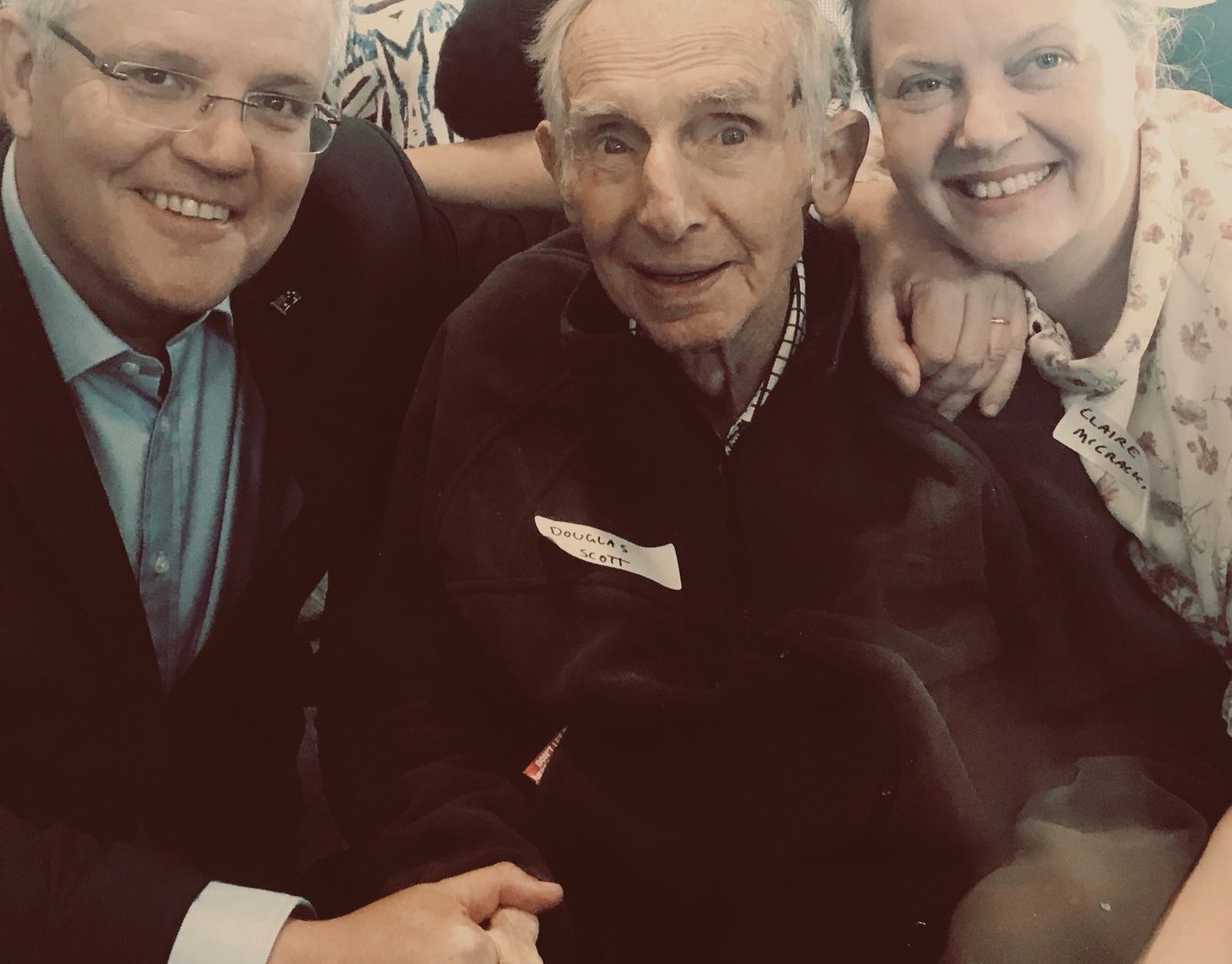
Advocating for a gentleman for the NDIS once I took his 93-year-old father to a function the prime minister was attending. I figured well if Mohammed won’t go to the mountain. I mean I was going to get close with a 93-year-old in a wheelchair pretty much guaranteed. I had my posh frock ready to wear after my morning care routine. I travel with a bag of clothes ready for multiple changes and ready for anything. This dear old soul had had an unfortunate accident and was lacking underwear. There was none to be found as his son with his catheter arrangement didn’t wear any to lend him. The last clean alternate was my own. A bright pink lacy pair.so off I went with my attendant in my underwear and with me with none and my posh frock. Well, if it wasn’t the windiest day on record in Adelaide that day. But we did indeed meet the prime minister and elevated his son’s issue who received all the funding he needed. However, I do ponder if I was careful enough when bending over for the photo. No one fainted behind me but there were a few audible gasps.
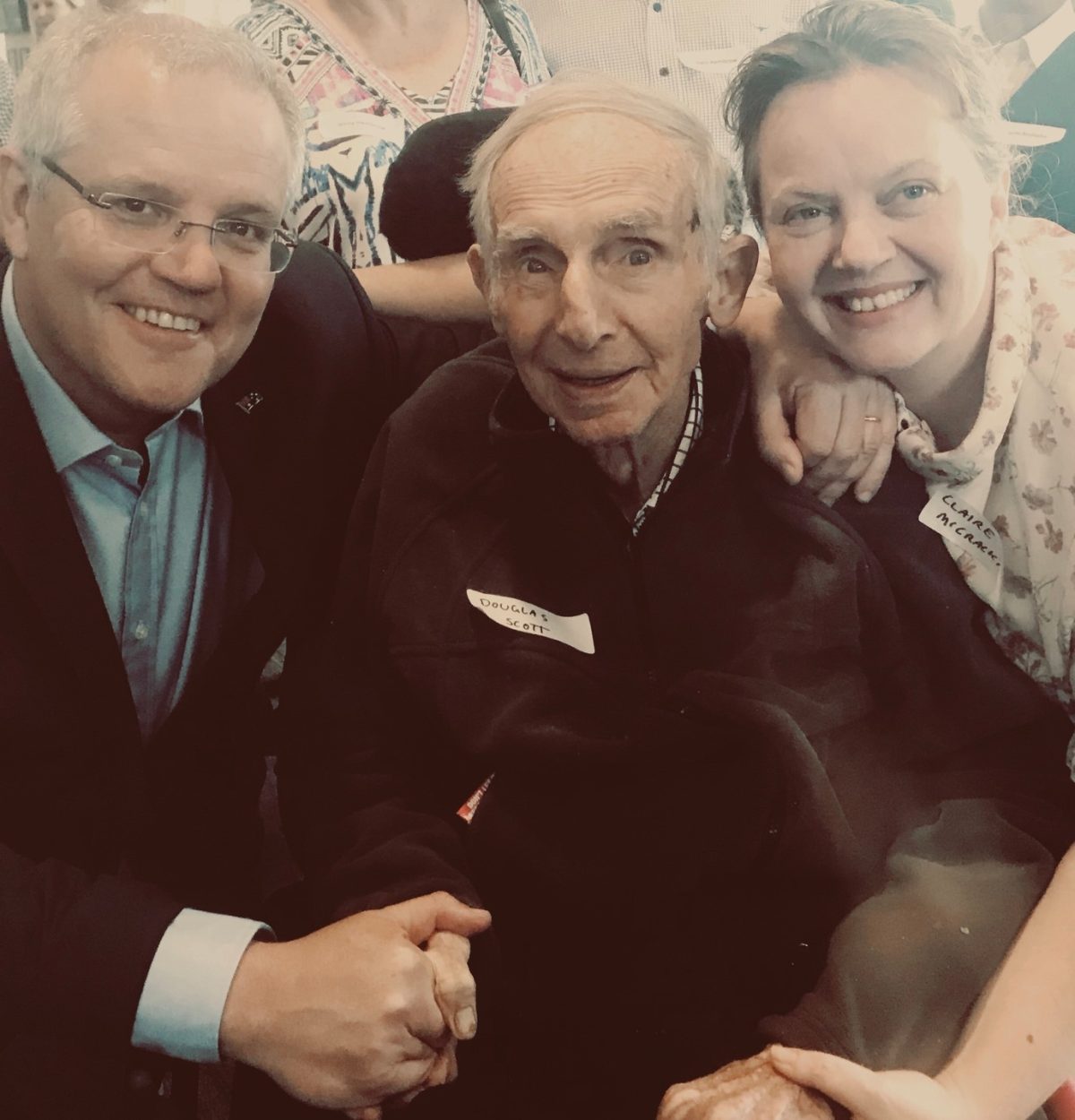
That wasn’t the end of that adventure, as fortune would have it, the gentleman became ill, and I took him to the hospital. Of course, they wanted him in a trendy gown, which looked all the trendier for the pink lacy knickers he wore. He said nothing at all and winked at the nurse. I was absolutely mortified.
Sometimes, in acting as a communicator assistant for people, it can be a very interesting exercise. I remember one chap who was close to his time lying in bed, and a long-time friend sat by the bed leaning over and chatting. The chap was trying to say something, and I suspect the scenario being the end of his life, the friend thought these words must be of vital importance. So, I was summoned to the room and asked what he was saying with such earnest eyes and interest. Embarrassingly, the gentleman had been gasping and trying to tell his friend to “please get off my cock.”
Often these situations can be hilarious. The humour and the intelligence of people with a disability isn’t something, sadly, people expect. I try to communicate exactly what is being said as a facsimile, as it is a very privileged task. But sometimes I have to say it can be extremely difficult, especially when I say what is being said and I am not believed.
I was caring for a man who was passing away over a Christmas period, and on this particular day, I could see that it was close to be his very last. So, I decided it would be good to shave him and encouraged his wife to do the task for some together time. His eyes smiled at her lovingly as she shaved him. He hadn’t used a blade in decades, and she had never shaved him before. It was extremely intimate. He died a few hours afterwards, and the wife lay on his chest crying and telling him how much she would miss him when she suddenly stroked his face. The mood changed to wonder as she stated, “My goodness, that’s a good shave—you are so smooth.” How life gives its own comic relief.
The amazing humour and laughs I have enjoyed over the years are just too many to count.
One woman was denied access to the changing rooms to try on a bra, so I took her in there and together we tried on all of the bras. We had an absolute ball. She was going to an engagement party, and she looked lovely in suspenders and a proper bra. Many won’t spend the time or find it too difficult to dress people in complicated clothing. It just takes a little patience, and it’s so worth it.
The same woman regaled a story about sitting in her chair outside a shop having a drink and someone walking past and dumping change in her cup because they thought she was begging. She yelled back, “Thanks, now I can afford to buy another drink.”
It does enrage you when you discover the reality of the discrimination and attitudes of people in the community. The lack of understanding and knowledge is astonishing. In the beginning, I found it overwhelming, but I learnt self-sufficiency and resilience.
I remember a day out at a wildlife park. We were encountered by some very overfriendly emus. There was a pack or a gaggle or a giggle of emus—whatever you call it. We ended up making a quick exit as fast as the chair would go. We got into the yellow-tailed bandicoots’ enclosure, which was fine, but I couldn’t work out how to get out of there. The gates out were a bit close together. We had managed to get through some by my sitting on the lap and driving the chair, but there were two gates, so there was no way for the bandicoots to escape. This proved problematic. All I can say is there was a lovely view over Adelaide that evening as we sat and waited for rescue. You just have to quite literally roll with it.
An attitude that I have acquired in this job which has greatly enriched my life.
In the old Royal Adelaide Hospital, I was attending to a client in the shower. Now, he liked long showers as it was immense pain relief, and I had the habit of singing. The old RAH at least had shower hoses suitable for showering someone else, unlike the new hospital, which claims accessibility but, aside from other issues, has very short hoses which are only suitable for standing showers. Anyway, I’m singing away and shaving him when there’s a knock at the door. To my embarrassment, the water wasn’t draining and was running down their corridor.
I’d love to see better accessibility and dialogue with people with a disability regarding their needs in the community. Better awareness about disability and true inclusion. More secure and supported employment for its staff. Training that suits this evolved contemporary role in an evolving system of care. We do everything from enemas, medication, medical appointments, critical observation, oxygen management, palliative care, family management, legal support, dietary control, travel, and planning, to name a few. It’s like being a personal assistant to someone. It varies depending on the person and the circumstances, but the possibilities for adventure are endless.
I’d also like to see a platform attachment for the back of motorised wheelchairs. I fancy riding along on the back. That would definitely be very cool.