To regulate or not to regulate… do we really have to ask the question?
“Any rule endorsed by government where there is an expectation of compliance.” – Australian Government Guide to Regulatory Impact Analysis (2020)

Did you know that it’s illegal for your chicken to cross the road in Alabama?
You want to ask why the chicken can’t cross the road, right?

Former road crosser turned good.
Apparently, it’s illegal to have more than 50kg of potatoes in one place in Western Australia (someone was making moonshine). Oh, and you can’t hike without clothes on in Switzerland. In Samoa, it’s illegal to forget your wife’s birthday.
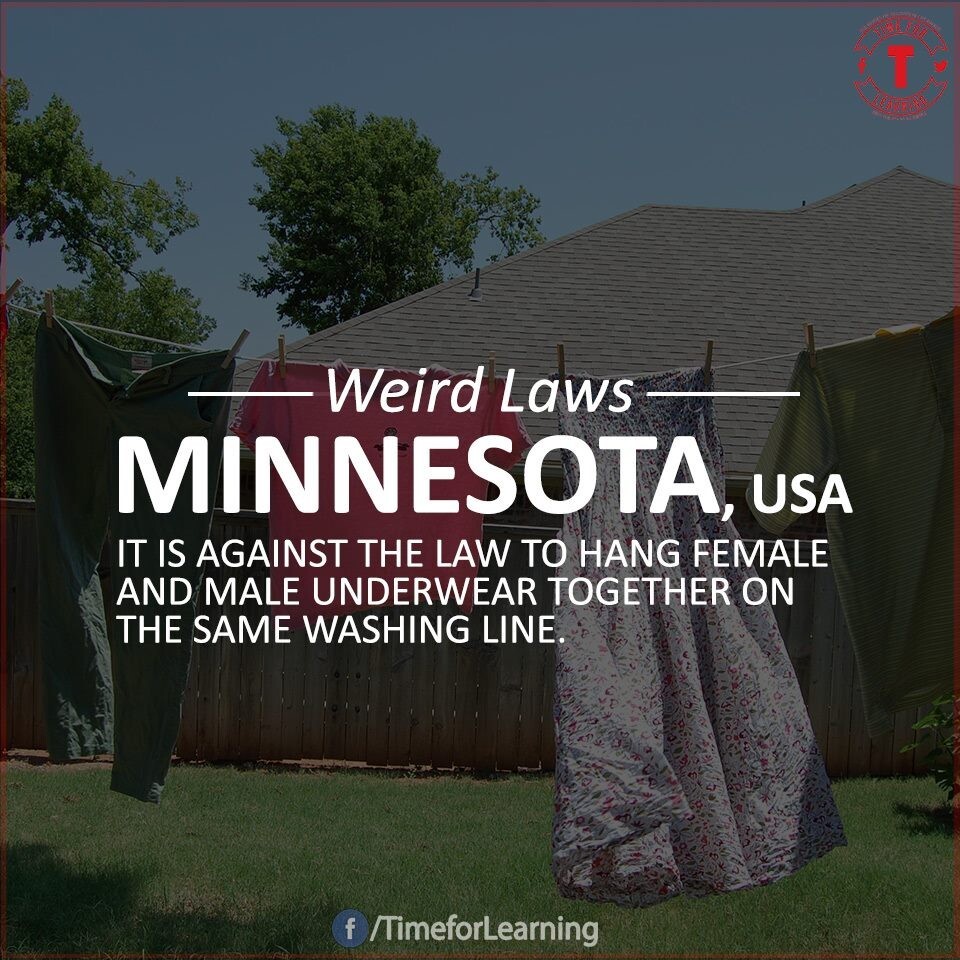
Mind boggles how this came about, huh?
There are certainly some really strange rules around the world. It makes one wonder what the hell must have been going on in order for these laws to come to pass. I mean, what on earth was going on with chickens in Georgia? How many men had to die in Samoa forgetting their wives’ birthdays before they passed that law, heh?
At least hubby would be quiet but still wouldn’t take out the trash.
Regulations are generally a response to an issue in society that are formed to prevent harm and enforce compliance.

He is clearly wearing the wrong shoes and absent a hat.
I am sure many of you have heard about the Darwin Awards, which every year represent those who, through lack of common sense, poor judgment in the moment, and sometimes just bad luck and misadventure, have met an unusual end. These crazy stories set the scene and are in some way representative of why we have to have lifejackets on boats and have to provide proof of age when buying dish pods in some countries.
I have lived in countries on western compounds where the inhabitants have to self-regulate in a town microcosm. It is often interesting to see how wild west it becomes and how quickly. You’ve read Lord of the Flies, right? Just add lots and lots of home-made alcohol and extreme boredom in a mostly male unsupervised environment. What could go wrong, right?
We live in a crazy world where natural curiosity, a search for adventure, misplaced ingenuity, and lack of common sense sometimes collide.
Regulation is a very hot topic now in the disability world.

Is that a TV at the front?
The NDIS has had a decade trial run now, and it came to a point that it was somewhat obvious that we required a few changes. Some of it is government oversight and some of it is just us.
Things kind of got so out of hand that one wouldn’t have been surprised if, at the casino, there was an NDIS table next to the blackjack. Only kind of more wild west saloon crossed with the Hunger Games kind of style.
We now know what the issues are and all that really needs to happen now is to fix the problem.
No point flogging a dead horse, right?
Yet after a six hundred-million-dollar Disability Royal Commission and a year-long review with an absolute crack team, there is still debate about the recommendations.
The most controversial are registration of providers and qualifications for support staff.
Providers are split into two groups basically: registered and unregistered. Most of the population could be forgiven for believing that all the providers are registered, but they are not. Can you believe that it is possible to get a company that was a gym one week and an NDIS provider the next?
I mean, you wouldn’t be at all surprised if you went for a massage and were offered your best life out the back. It has been a bit like a modern gold rush. So out came the snake oil salesmen in force. It has happened time and time again—from the gold rushes, to the tulip revolution, the dot com crash, and bitcoin. I mean, anyone at all can lay claim to their part and make their fortune, right? It was kind of like tying up that sweet little goat in Jurassic Park and blaming the T-Rex for eating him though. I mean seriously, what did they expect?

Can you believe you can get support staff who don’t even have a first aid certificate working with children or high needs participants? You can earn good money with nothing down and nothing, but hard work invested.
I thought the spirit of the NDIS was to be free from the burdens of day-to-day care to have choices in life. Sure, choices in choosing the company and control over what is possible to have control over. But if you can’t get any staff or manage your care or maintain your health due to poor care, then what choices are you using here?
The government can only do so much.
On one hand, we complain we do not wish to become a nanny state, and we resent government being too far in our lives, and yet we complain bitterly when things don’t go right?
In the disability world, this is further exacerbated by the facts and truths of the history of disability. For those who grew up in institutions or in places called the Centre for Incurable Diseases, there is deep-seated trauma there. I can well understand why people fear regulation. But far too many have suffered for its absence in the last ten years.
The NDIS was met with great hope but unfortunately trust has been eroded; we have had COVID in the middle of it, there’s a cost-of-living crisis, massive worker shortage, and a housing crisis.
The Disability Royal Commission was also a traumatic event for many. So, there is an element of resistance to change in the sector and a historical distrust of providers. The belief that registered means a focus solely on profit and that choice and control is more easily facilitated in an unregulated environment. From discussing the past with those I know who grew up in institutions, being forced to be touched without consent by people you don’t want to touch you was not common practice even in institutional days. Not saying it never happened or doesn’t, but it was not the norm. This statement of being forced to have people touch your body you don’t want is purely emotive to create panic. There’s been enough panic, even distress and enough trauma. It is time to pull together, work together and build something new.
Choice and control is about being at the centre of your care and in control of the support that supports your life. Without care being consistent and competent, the choices available in life are merely illusory. There is a life that many would prefer to lead where support just worked, and they are free to live a life beyond the NDIS. To have the choice to be free from carefree from NDIS dominating their lives. I believe the NDIS want that too.
The workforce failure and the threat of sustainability to providers is a much larger and imminent threat to choice and control than regulating it.
It isn’t plausible in one breath to say, “I don’t want the state to live in my home,” but “I need NDIS, I drive on the roads, my kids go to school, I use the health service.” All regulated and for reasons we often found out the hard way. If the government are responsible, and they are, they need to regulate to ensure compliance.
The sector had its chance, and we collectively blew it.
We travelled the road just as we did for the last ten years with the NDIS. The DRC and the NDIS review is in reaction to the system needing adaptation and safety being the foremost concern. Safety and competence and rorting on an unprecedented scale.
Regulations are the fabric of a civilised society and a mutual obligation of the social contract. None of us are free from them. If we were, there’d be no tax and no funds to support the community. It’s rules and regulation that enable the taxation funds to be gathered to allow for things like a health service, an NDIS, an education system, roads to drive on, and a safe society that is policed with rescue services and a fire brigade. Questioning regulation and stating regulation itself is a choice is an extremely slippery slope and will prove to become a somewhat circular experience, as we will find ourselves right back here… eventually.
Why don’t we have an unregulated society with no rules?
We’ll let history tell you why. We evolved to this just as we evolved to an NDIS. We must trust the system that gave us the NDIS in the first place.
Well, would we ever just close prisons and say, “Ok, no laws, let’s let everyone decide for themselves?”
Let’s have no regulations. As I said, have a look at the Darwin Awards—that’s a fine example of why we have regulations. You can have a read through if you like and see the reason why you must have life jackets and first aid training on boats, or compliance regarding home electricity, or even why we must have little hazard signs. Regulations save lives every day. Ironically, without them and the ability to form government, things like the NDIS are somewhat absent, are they not?
Now, of course, it isn’t foolproof. There will always be someone that is an exception to a rule—that individual who decides, “Yes, let’s use a .22 calibre bullet to fill in that fuse on the car” and thinks they are a genius until the engine heats up. (I’ll allow you to guess the result, but he was unable to have children.)

But let’s remember the first thing out of anyone’s mouth when stuff goes wrong is, “Someone should do something,” which generally means the government.
Well, after nearly a billion dollars’ worth of listening including the DRC, they are.
It is not true all providers are raking in cash. It’s a simplistic view touted by some alarmists to get a response and doesn’t represent the truth of the matter. It doesn’t allow for change and fails to embrace the entire purpose of the DRC and the review. Cementing beliefs for all time confines providers to the past and, in my opinion, enables it. For goodness’ sake, don’t come this far just to let us off!
Frankly, it misleads and frightens already frightened people. Because amongst all providers, registered and unregistered, there are those who, without their tireless efforts and goodwill that has bankrupted many, many would have perished. It serves no one to bear grudges and paint all with the same brush. Anti-discrimination and inclusion apply to all souls.
This is an unprecedented opportunity that would work better for those in every part of the sector to work together and build an NDIS that enshrines choice and promotes competence. Trauma has not discriminated; it has touched every facet of the sector—from participant to the workforce and the provider, including those within the NDIS and the NDIA.
It would be foolhardy to be unaware of the threats to service and choice (less providers), and we must be vigilantly supportive of sustainability and condemn fraud. A failing workforce also means less choice. Demanding choice and control is one thing, but there must be choices to ratify that right. Or there will be no choice. Do we really wish to go backwards, eyes wide shut, back to institutions?
One part of the sustainability of the scheme is dependent on if we can keep providers’ heads above water, or will it just be the old legacy providers who will sustain this and just buy everyone else out? Why punish the new and innovative? Why prohibit change and reconciliation between the older providers?
We need to support innovation and collaborative and productive support and be open to support a system that works together and isn’t segregated in its parts. Whilst all voices must be lifted and are relevant at this time, those who are less encumbered and inhibited by past trauma need to help and support those who are battle-weary and struggling and be good enablers. For those less able for any reason—either physically, cognitively, or due to trauma contamination or battle fatigue—they need to be self-aware of their limitations of good judgment. So, we can take those opportunities with a fresh heart and embrace the possibilities and not just the negative ones.
Another area of resistance is the standards of support staff. This is a tough area to have oversight over as for every participant support can mean an entirely different thing. However, when it comes to maximisation of plan outcomes, choice and control, safety and consistency, and capacity building, staff are the key and the elephant in the room.
Wouldn’t you love him as a mascot? What a cheeky face.
I have seen staff who were sent out still with a home detention tag on for category A drugs. People that were unable to read the days of the week on a Webster pack. Polypharmacy and overmedication of Schedule 8 drugs. Plans over-utilised. Staff drive participants’ cars with no driving licence at all. People turn up to work with their cats. A man spent 10 minutes literally quacking like a duck in the bathroom because he’d been sent to find the toilet duck.
The role has vastly changed and is so undervalued it has become pitiful. The support worker in the middle with often no ally. There is so much scope for strengthening here if we value, adapt, train, and value our staff. We are not listening to them.
I have also seen job insecurity, overpriced not fit-for-purpose courses, exploitation by providers and participants. Verbal, physical, and sexual abuse in the workplace. In fact, I have experienced it, and I will point out to you I am a person with a disability myself.
I have also seen tireless support from registered and unregistered providers and staff at the cost of their profits; deliberate uncooperating from participants not allowing critical knowledge, risk assessment, and best practice; unreasonable demands or expectations for service; and the burnout of family, friends, and yes, staff as well in a bid to care for the ones they love.
I have seen anyone with a soapbox class themselves as advocates and diminish the integrity of the sacred role of advocate. Poor information, wrong information, and misinformation. The gathering of victims beneath them to push an agenda, and then the discarding of those hopeful victims afterwards.
No one is immune to the toxin and infiltration of the agenda in our sector.
We must support each other and be inclusive of each other.
So, what could regulation achieve for us?
In this case, the horse has well and truly bolted. Regulation and registration of providers is now a fait accompli. There is no escaping the fact that we have earned that ourselves.
The good news is that we have control over our choice to work together to shape what that will look like. To make it a positive thing. Something that enshrines the values we all share for the next generation. Or we can all hold onto old beliefs, remain firm, and achieve far less, or worse, perpetuate inadvertently another turbulent time ahead. On the current trajectory, the NDIS in my opinion wouldn’t survive in the essence we see it as now for another decade.
This is a historic moment.
I am very proud of our strong, active disability community. We have an amazing provider pool with people who have dedicated their lives to the common good. We can revitalise the workforce and celebrate, reward, and recognise those within it who deserve our support.
We have come far.
We also have a government that is listening.
It’s time now to adapt, to change, to work together truly and to preserve the system that sustains us.
But this is not actually about regulation now, is it?
Ultimately, it’s about culture.
Which cannot be regulated, however much we could try.
That, my friends, is a choice.